
Class 3 English Worksheet on Emotion and Trait Vocabulary

Class 3 English Worksheet on Emotion and Trait Vocabulary
Feelings and Traits: Vocabulary Building for Class 3
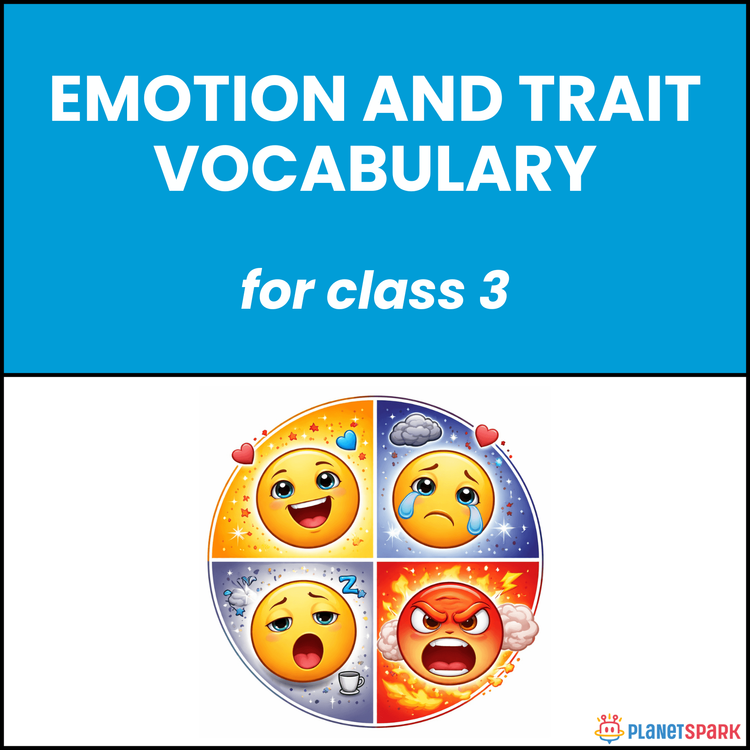
This Grade 3 worksheet focuses on helping students understand emotions and personality traits through engaging vocabulary exercises. Learners explore words that describe feelings such as happy, sad, scared, and excited, as well as traits like kind, brave, honest, and hardworking.
As seen in the exercises (pages 2–6), students practice identifying emotions, understanding feelings in context, recognizing personality traits, matching tone in sentences, and learning synonyms. This structured approach builds strong vocabulary, emotional awareness, and language skills.
Why Emotion and Trait Vocabulary Matters?
Understanding emotions and traits is important because:
1. It helps children express their feelings clearly.
2. It improves communication and social understanding.
3. It builds strong descriptive vocabulary.
4. It supports reading comprehension and writing skills.
What’s Inside This Worksheet?
🧠 Exercise 1 – Emotions Vocabulary
Students identify words describing emotions like joyful, upset, afraid, and relaxed.
✏️ Exercise 2 – Feelings in Context
Learners choose the correct feeling based on sentence clues (e.g., crying → sad, smiling → happy).
📋 Exercise 3 – Personality Traits
Students identify traits such as caring, bold, truthful, and diligent.
📝 Exercise 4 – Tone and Mood
Learners match words to the tone of sentences (peaceful, excited, scary).
🔍 Exercise 5 – Synonyms
Students learn similar words (happy → joyful, fast → quick, run → sprint).
✅ Answer Key (For Parents & Educators)
Exercise 1 – Emotions
1. joyful
2. upset
3. afraid
4. excited
5. relaxed
6. angry
7. sleepy
8. nervous
9. uninterested
10. shocked
Exercise 2 – Feelings in Context
1. nervous
2. proud
3. sad
4. excited
5. scared
6. happy
7. nervous
8. upset
9. excited
10. shy
Exercise 3 – Traits
1. caring
2. bold
3. truthful
4. caring
5. idle
6. impolite
7. diligent
8. self-centered
9. respectful
10. kind
Exercise 4 – Tone
1. joyful
2. calm
3. scary
4. happy
5. angry
6. quiet
7. cheerful
8. scary
9. peaceful
10. excited
Exercise 5 – Synonyms
1. spoke
2. joyful
3. large
4. little
5. quick
6. steady
7. see
8. sprint
9. hop
10. speak
Help your child build strong vocabulary and express emotions confidently with fun learning worksheets today!
Frequently Asked Questions
This worksheet teaches students to identify emotions, understand personality traits, and use vocabulary in context to improve communication skills.
It helps children express their feelings clearly, understand others better, and improve both speaking and writing skills.
It builds strong descriptive language skills and supports social and emotional learning along with academic development.